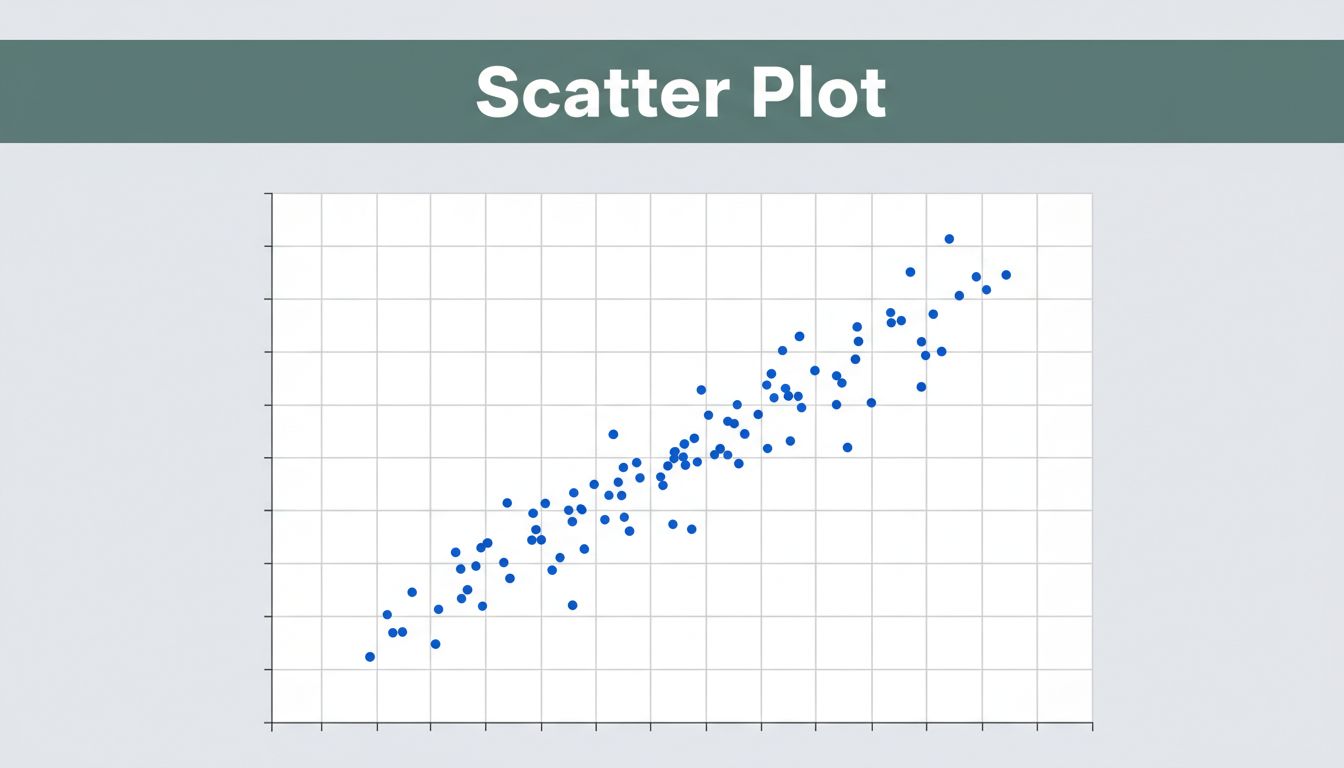
Imagine you track hours studied against test scores for a class. Some kids cram all night and ace exams. Others slack off and bomb them. A scatter plot turns those pairs into dots on a graph. It reveals if more study time links to better grades at a glance.
This simple tool plots two numbers on axes. Dots show their relationship. You spot trends fast, without complex math. Businesses use them for sales data. Scientists check experiments. You can too.
We’ll break down parts, reveal patterns like correlations, teach reading steps, and share real uses. By the end, you’ll analyze charts like a pro.
Break Down the Basics: Key Parts of Every Scatter Plot
Every scatter plot starts with a grid. Dots mark data pairs. Labels guide your eye. A title sums it up. These elements make sense of numbers.
Take student height and weight. Plot height on one axis, weight on the other. Each kid becomes a dot. Patterns emerge. Independent variables go on the x-axis. They don’t depend on others. Dependent ones hit the y-axis. They might change because of the first.
Clear parts prevent mix-ups. Good plots tell stories without words.
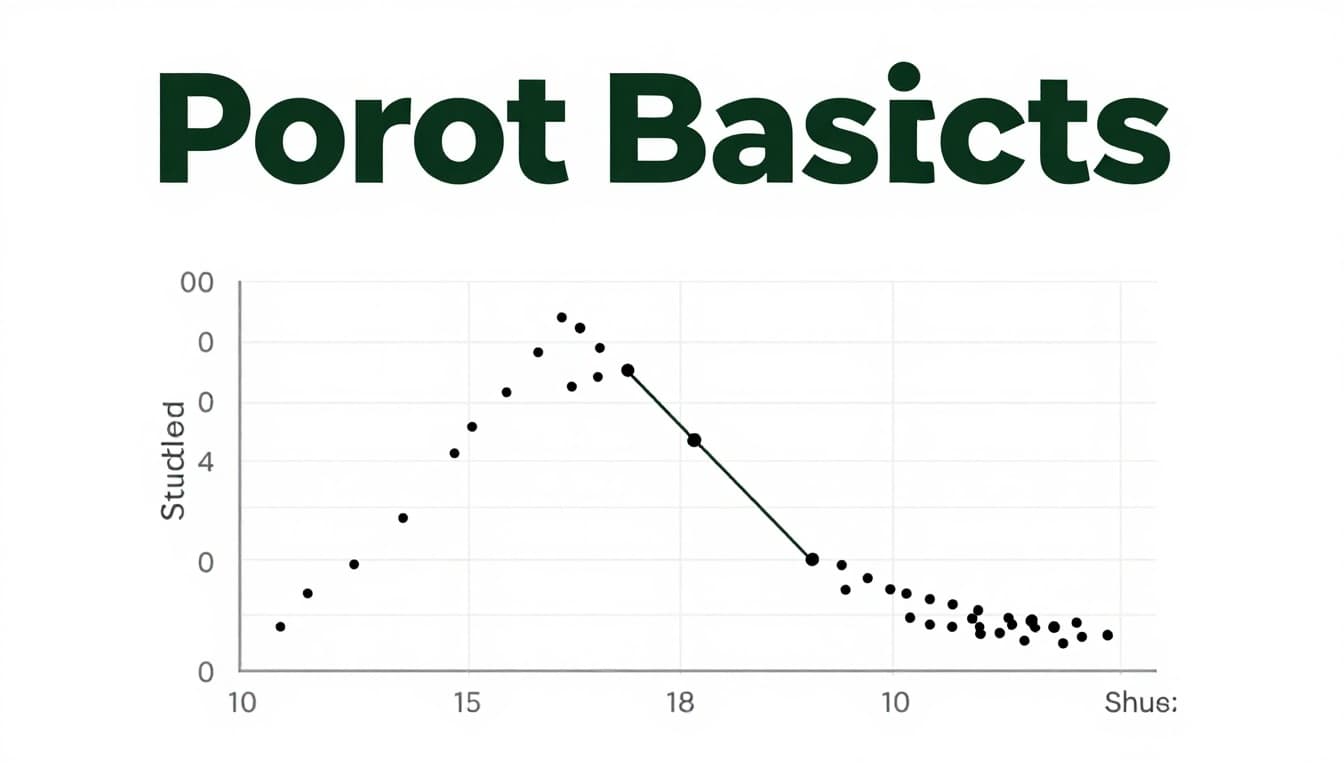
Axes and How They Work Together
The x-axis runs horizontal. It often holds the independent variable, like time or cost. Numbers increase left to right. The y-axis stands vertical. Dependent variables live there, such as scores or sales.
Label both clearly. Include units like “hours” or “pounds.” Scale them right. Start at zero when possible. Even spacing avoids distortion. Poor scales trick the eye.
Axes team up to frame data. One controls position. The other sets height. Together, they pinpoint relationships.
Dots, Trends, and Outliers Explained
Each dot pairs one x-value with a y-value. It shows a single observation. Cluster them, and patterns appear.
Trend lines cut through dots. They show overall direction. Straight up means positive link. Down suggests negative. No slope? Random.
Outliers sit apart. That low scorer after 10 study hours? Flag it. Investigate why. Trends summarize. Outliers demand attention.
What Scatter Plots Reveal: Correlations, Patterns, and More
Scatter plots shine at relationships between numbers. No categories needed. Just pairs of values. They uncover if variables move together.
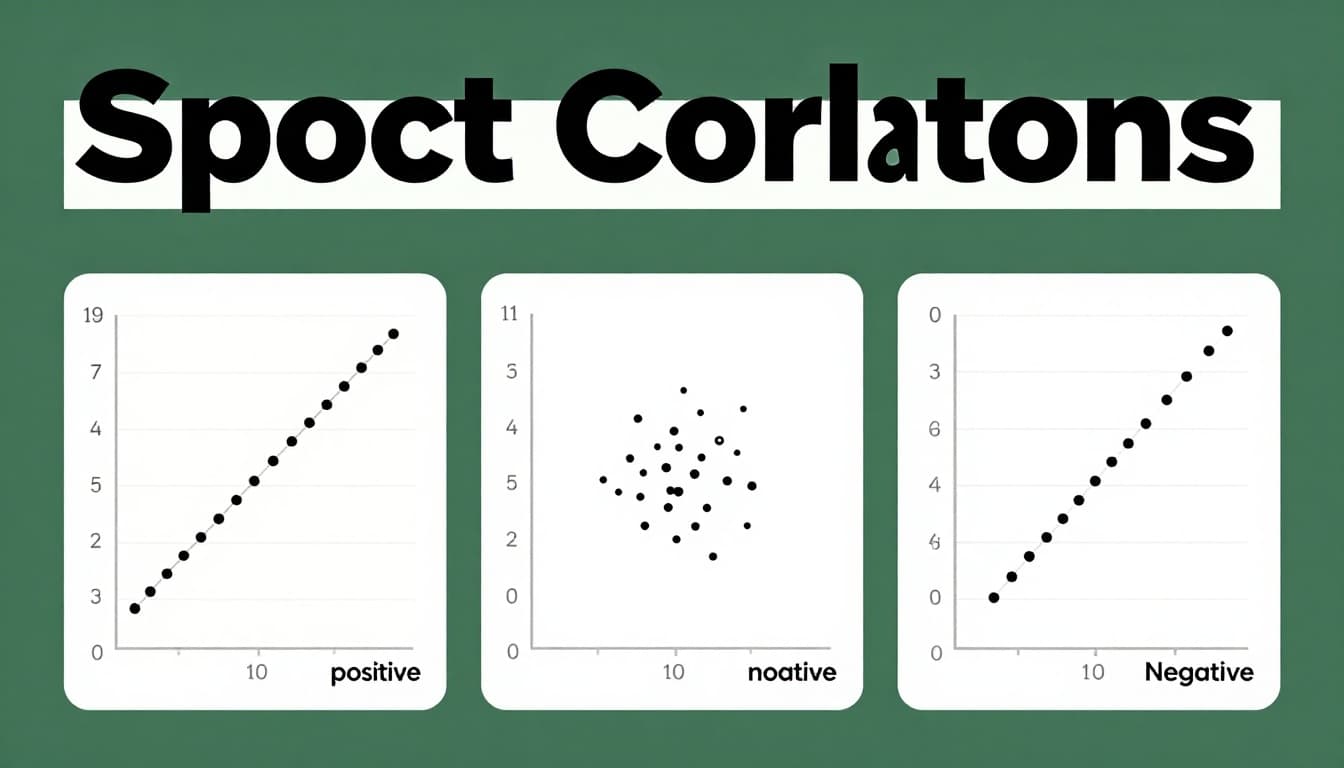
Positive correlation slopes up and right. As x rises, y does too. Negative goes down right. One climbs, the other drops. No correlation scatters wide. No clear link.
Strength matters. Tight dots hug the line: strong bond. Loose spread: weak tie. Clusters group similar points. Curves bend instead of straight.
Remember, correlation isn’t causation. Ice cream sales rise with shark attacks in summer. Heat drives both, not one causing the other. Plots hint. Tests confirm.
For more on correlations, check Coursera’s guide to types.
Types of Correlations You Can Spot Instantly
Strong positive looks like a steep uphill march. Dots pack the line. Weak ones wander more.
Negative strong dives sharp. Points align down right. Weak scatters looser along that path.
No correlation fills space evenly. Predict one from the other? Impossible. Visual cues guide you. Tight pack means reliable link.
Beyond Lines: Curves, Clusters, and Surprises
Straight lines fit linear ties. Curves show other shapes, like U-bends.
Clusters reveal subgroups. High-end dots bunch? Premium segment. Low ones group? Budget crowd.
Outliers surprise. That lone dot changes everything. Dig deeper. Non-linear patterns and groups add depth. Straight misses them.
Master Reading Scatter Plots in 5 Easy Steps
Grab any chart. Follow these steps. You’ll decode it quick.
- Check direction. Dots trend up right? Positive. Down right? Negative. Scatter? None.
- Gauge tightness. Dots near a line mean strong correlation. Wide spread shows weak.
- Hunt clusters. Groups suggest segments. Like teams by skill.
- Spot outliers. Lone points flag exceptions. Why do they differ?
- Note shape. Straight line or curve? Linear or not.
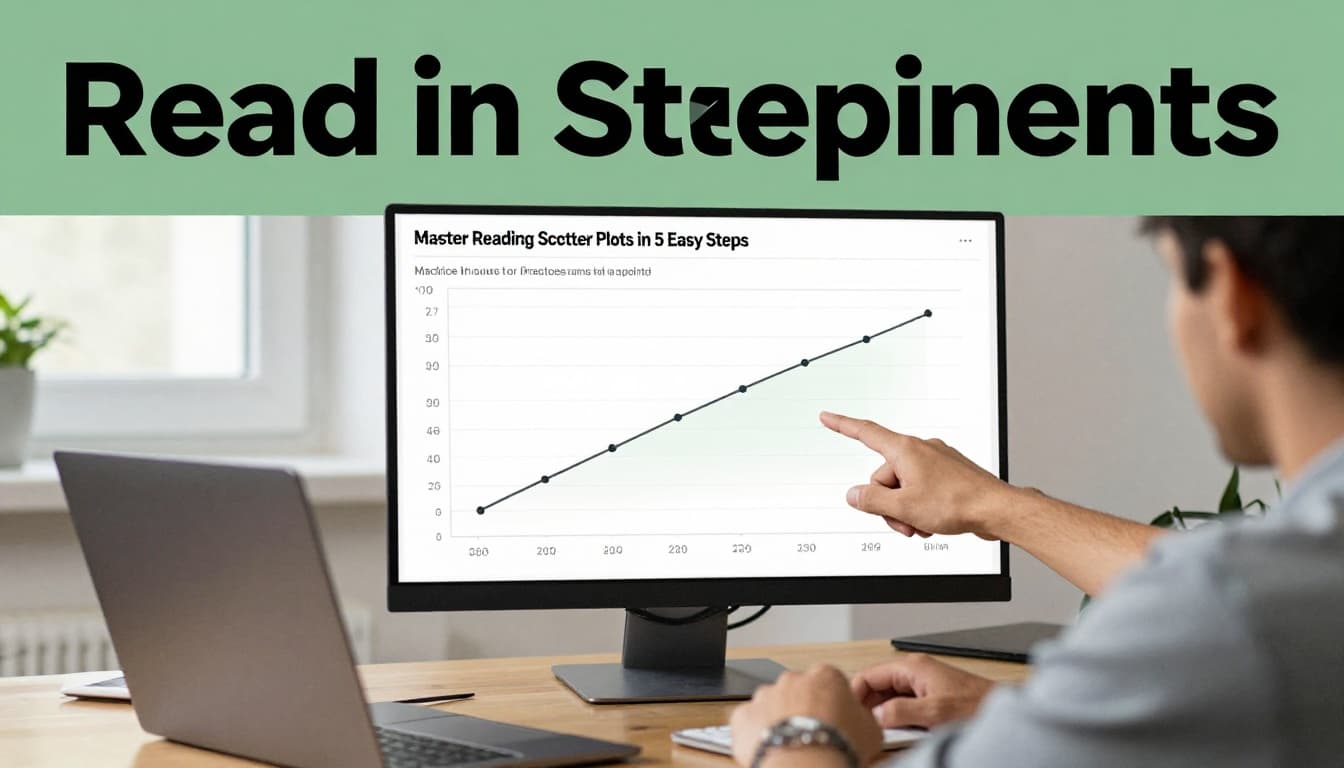
Picture basketball practice hours versus points scored. More practice, higher scores trend up. Tight line predicts performance. One rookie outlier bucks it. Add a trend line. Forecast future games.
Practice on Statistics By Jim’s scatterplot examples. Steps work every time.
Real-World Power: Scatter Plots in Business, Science, and Everyday Life
Plots power decisions everywhere. In business, map ad spend to sales. Dots cluster high return? Double down. SaaS firms plot customer cost against lifetime value. Clusters reshape strategies, per recent reports.
Science checks temperature against plant growth. Warmer? Faster sprouts. Health tracks exercise minutes to disease risk. Downward trend motivates.
Sports links practice to wins. Health plots BMI over time; 2026 studies show rises in cohorts. Everyday? Track sleep hours to mood scores.
Unlike line graphs for time series or bars for categories, scatters handle pairs best. 3D versions add depth. Matrices show many pairs.
March 2026 trends boost them. AI auto-generates plots. Real-time updates live data. Interactive hovers reveal details.
Top Tools to Create Your Own Scatter Plots
Start simple. Excel or Google Sheets handles basics. Select data, insert chart. Done.
Pros pick Tableau or Power BI. They add AI forecasts. Python with Matplotlib fits coders. Free online makers like Flourish skip code.
No-code options exploded in 2026. Upload data. Get interactive plots fast.
Pitfalls to Dodge and Pro Tips for Standout Charts
Wrong data kills it. Use numbers only. Ignore outliers? Miss stories. Bad labels confuse.
Crowd too many dots. Sample big sets.
Tips: Color by groups. Add legends. Scale fair. Keep clean. Right tools shine.
Scatter plots join seven basic charts. Master one, level up analysis.
You’ve got the basics now. Parts, patterns, reading steps, real uses. Scatter plots uncover hidden links fast.
Try one today. Plot your fitness data or budget spends. Use Excel. Share results in comments. What trends surprise you? Dive into tools next for hands-on fun.